tarting a claw machine business in 2026 costs USD 1,800–4,500 per machine, ready to operate. A well-placed commercial machine grosses about USD 1,200–1,800 a month and nets USD 400–650 after prizes, venue fees and maintenance. Plan for a payback period of 6–12 months, and start with three machines across two to five sites rather than a full arcade.
A claw machine (also called a crane machine) is a prize merchandiser: players pay per attempt to lift a prize with a mechanical claw. Commercially it behaves like a small unattended retail unit, but its revenue depends far more on where it stands and what is inside it than on the machine itself.

What it costs to start
The machine is usually less than half of what you actually spend. Everything below is a modelled estimate based on factory-direct supply, not a quotation.
Startup cost per machine
Three starting sizes: one machine to test a single site, about USD 2,000–4,500; a three-machine pilot across two to five sites with a three-month reserve, about USD 6,000–15,000; a ten-machine fleet, about USD 18,000–40,000.
Costs first-time buyers forget: a spare parts kit (claw, string, buttons, locks — USD 100–300), liability insurance, venue deposit, and the cost of getting power to the spot.
Why our prices differ from US retail listings. The ranges above are factory-direct. US retail or distributor pricing for the same machine class commonly runs two to three times higher because it includes local stock, warranty service and margin. Always check whether a quoted price is EXW, FOB, CIF or DDP before comparing. See our full claw machine price and ROI guide.
What one machine earns
A well-placed machine nets USD 400–650 per month on gross revenue of roughly USD 1,200–1,800. Net margin usually lands between 30% and 40% of gross.
Monthly profit and loss per machine
Modelled estimates. Validate with a paid trial before scaling.
What drives revenue: location quality, machine visibility, prize appeal, price point and payment convenience. Across commercial sites, 30 to 90 plays per day is the normal working range at USD 1–2 per play; a poorly placed machine can sit near 10.
How to calculate payback. Payback (months) = total upfront investment / average monthly net profit. A USD 2,500 machine at the typical scenario above returns its cost in about 4.7 months. Budget 6–12 months, because new sites ramp, machines are re-calibrated after launch, traffic is seasonal and weaker sites pull the average down. The most common error is calculating payback against the machine price only, ignoring freight, duties, payment hardware and prizes.
Is a "60–70% margin" realistic? No — and it is worth understanding why, because the number appears in most guides. It usually describes either the prize-only gross margin (prizes cost 20–30% of revenue, so the rest covers everything else) or the operator's share under a venue revenue split. Neither is profit. After venue fees, processing, electricity, maintenance and collection, net margin lands at 30–40%. Compare business models on net profit per machine per month, not on a margin percentage.
Is it still profitable in 2026?
Yes, for operators who treat it as a location business rather than an equipment purchase. Demand is being driven by venues adding attractions and by cashless payment, while standalone arcade rooms in mature markets are flat.
Third-party vendor estimates. They disagree with one another and should be read as directional.
Four tests before you buy: can you secure a site at no more than 30% of gross in venue cost; can you hold prize cost at no more than 30%; can the site reach 40+ plays per day; and do you have the capacity to collect and restock?
Main risks: losing the site, local oversaturation, prize cost inflation, import and duty surprises, and downtime on a machine you have no spares for.
Choosing the machine
Machine class and venue fit
Five things to confirm before ordering: external and packed dimensions (will it fit the doorway and the freight?), the prize size and maximum lift weight, claw type and whether claw strength is adjustable, voltage and plug type for your market, and spare parts availability for claws, strings and motors.
Documentation. Ask for the actual test reports, not a logo: CE for Europe, UL for the US and Canada, FCC where wireless components are used. Check what your destination market and venue require.
Browse commercial claw machines, or see how claw mechanisms work before you specify a machine.
Where to place it
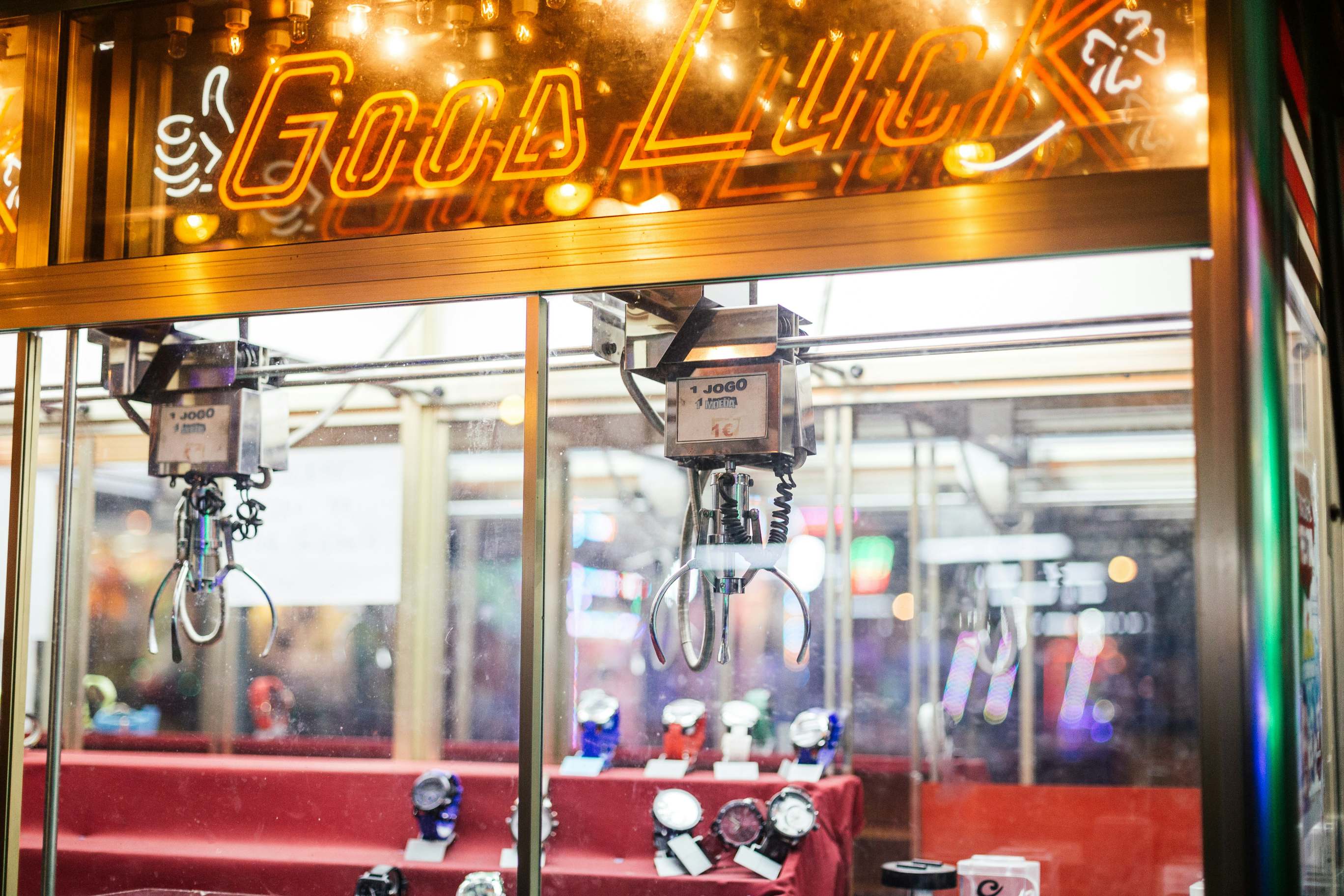
The best sites have foot traffic, dwell time (people waiting nearby) and an audience that plays prize games — families, teenagers and couples. Cinemas, malls, FECs and night markets outperform pure retail. The decisive number is venue cost as a share of gross revenue: keep it at 30% or less.
Location scorecard
Scoring: 80+ move quickly, 60–79 test with one machine, below 60 pass.
Best-performing venues: cinemas (captive pre-show waiting), malls (repeat family visits), family entertainment centers (audience already primed to play), night markets (impulse play, low fixed cost), and cafés or restaurants with captive dwell time.
Venue fees — the core points. Rent is typically USD 100–800 per month depending on market and format, or a revenue share of 20–35%. Whichever you choose, agree it in writing before the machine is delivered: the fee and how it is calculated, access hours for restocking, who pays electricity, and how either side can end the arrangement. A 30 to 90 day trial protects both sides while you measure real performance.
Prize strategy
Prizes drive both play rate and margin more than any other variable. Target 20–30% of revenue in prize cost and refresh the display every one to two weeks.
The plays-per-win formula:
Required plays per win = prize cost per win / (target prize ratio x price per play)
If a win costs you USD 2 in prizes, your target is 25% and you charge USD 1 per play, you need one win every eight plays. Change the price to USD 2 and the same prize supports one win every four plays. This is the calculation that connects claw strength, prize value and margin — operators who set claw strength by feel are the ones whose prize cost drifts to 40%.
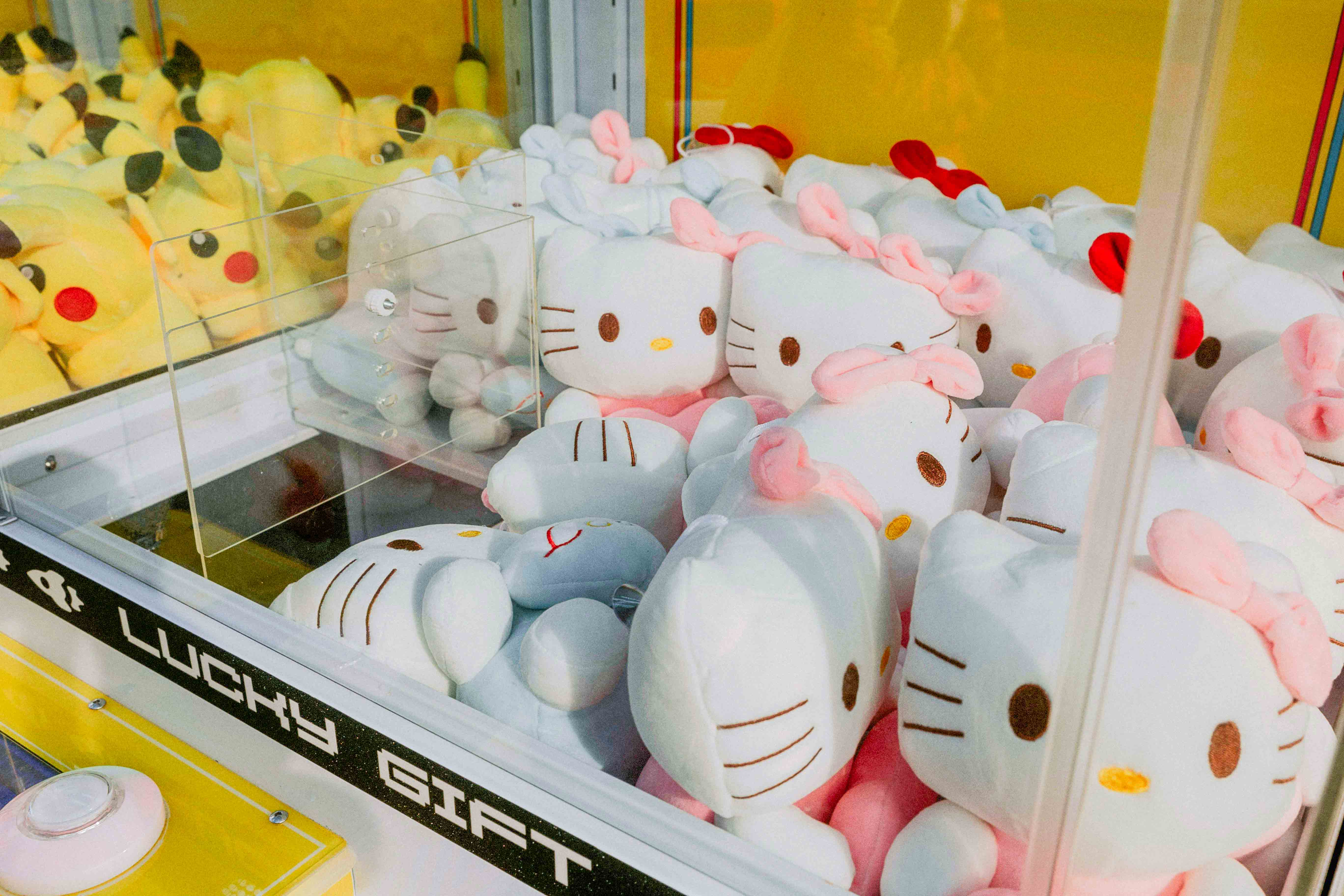
What performs: licensed plush, blind-box style collectibles, seasonal items and small bundles of three to five items per win.
Set claw strength so the machine is genuinely winnable, and check local rules — some jurisdictions regulate prize machines or take a position on skill versus chance.
A 90-day launch plan
Week-by-week
Track four numbers per machine: revenue per day, plays per day, prize cost as a share of revenue, and downtime.
Admin, in short. Register the business, confirm whether your city or state requires an amusement or prize machine permit, and arrange public liability insurance. Requirements differ by location, so verify locally before installing. When scaling, add machines only when existing sites are above break-even, and standardise on fewer models so parts and servicing stay simple.
Maintenance
Budget USD 250–600 per machine per year for wear parts.
At 50 plays per day and USD 1 per play, one day offline costs about USD 32 in net profit — which is why a spares kit matters more than a small saving on the machine.
Five mistakes that cut your returns
Final thoughts
The claw machine business rewards operators who run it as a location and margin business: model the landed cost, score locations before signing, pilot two to five sites, control prize cost with the plays-per-win calculation, protect uptime, and scale only after break-even is proven.
AMA ARCADE has manufactured arcade and prize machines for 17+ years. For a project-specific quotation, browse the commercial claw machine range, review our certifications and FAQ, or contact our team with your destination, quantity and venue type.
Operator case study
Shared with AMA ARCADE by a long-term US family entertainment center operator. Figures are his reported results and are illustrative, not a guarantee.
He began with three machines across a mall concourse, a cinema lobby and a night market pitch, deliberately choosing different environments so he could compare performance. Rotating prizes every two weeks lifted revenue by up to 30% versus a static prize mix, and calibrating each machine after two weeks of live play data — rather than on delivery — made the biggest difference to margin. He expanded past ten machines only after three sites cleared break-even across a full school-year cycle. His summary of what mattered: location quality, prize rotation and uptime, in that order