

2025-07-16
So, how much money do you really need to open an indoor playground?
A small children's play area inside a shopping mall is one type of project. A 5,000–10,000 sq ft commercial playground or an FEC with multiple attractions is another. Treating them as the same business is one of the main reasons online cost estimates vary so much.
For early planning, a small indoor playground may require around $50,000–$150,000 in total startup capital. A medium commercial project can move into the $150,000–$400,000 range, while a large indoor playground or FEC-style project can require $400,000 or more.
These are planning ranges, not fixed prices.
The most important distinction is between equipment price, landed equipment cost and total startup cost.
A $50,000 playground quotation may cover the equipment only. Freight, customs, installation, flooring, renovation, rent, insurance and working capital can still sit outside that number.
So if you are trying to work out what it will actually cost to open your own venue, start with the whole project rather than the equipment catalogue.
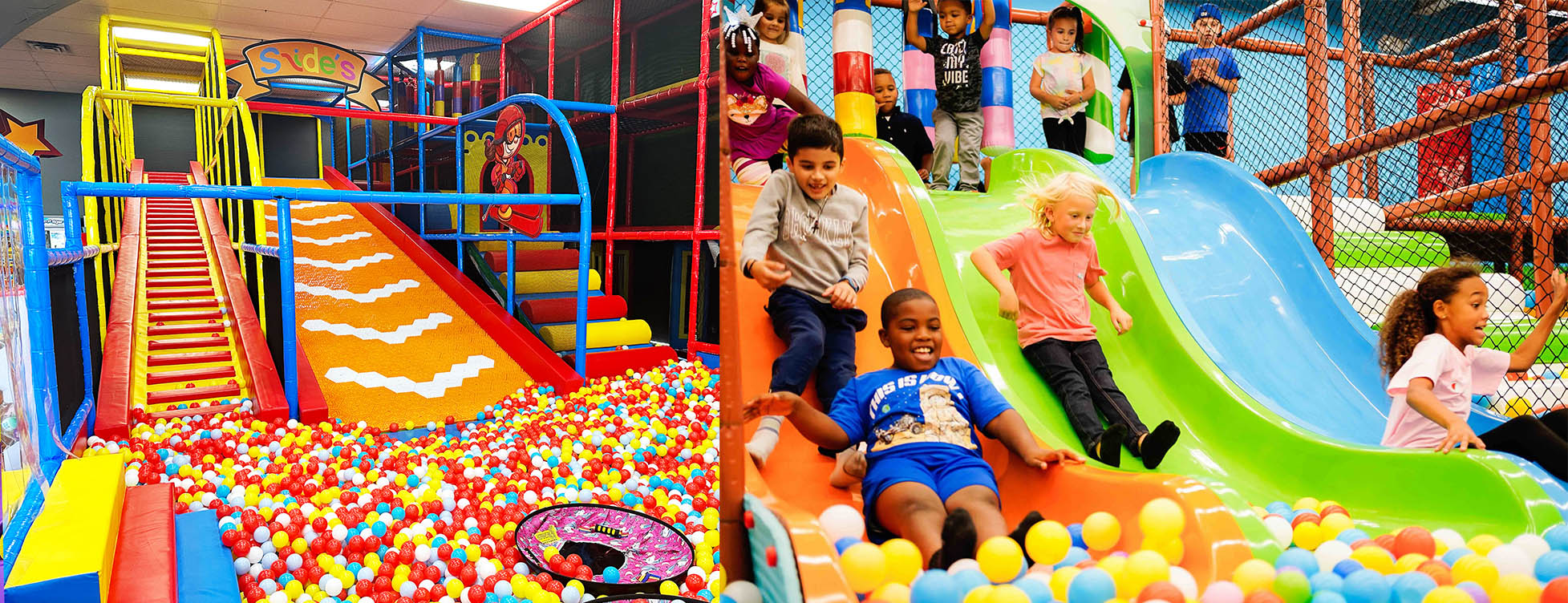
For a first-stage estimate, you can use the following ranges:
| Project Type | Approximate Size | Rough Total Startup Budget |
|---|---|---|
| Small children's play area | 50–150 m² | $50,000–$150,000 |
| Medium commercial indoor playground | 150–300 m² | $150,000–$400,000 |
| Large indoor playground | 300–500+ m² | $300,000–$500,000+ |
| Large FEC-style project | 500 m²+ | $500,000–$1M+ in some cases |
These ranges are intended for initial planning only. Venue costs, construction, local labor, rent and the equipment configuration can move the final number substantially.
Published 2026 market estimates also show a wide spread. One multi-city model covering 133 cities estimates total indoor playground startup costs at $40,826–$274,064, with a typical figure of about $135,147. A separate September 2026 estimate for a 5,000–10,000 sq ft U.S. commercial venue gives a much higher range of around $200,000–$670,000.
That difference is useful to understand because the numbers are describing different types of projects.
Do not use a global "average" as your final budget. Use it as a reference, then build the estimate around your actual venue.
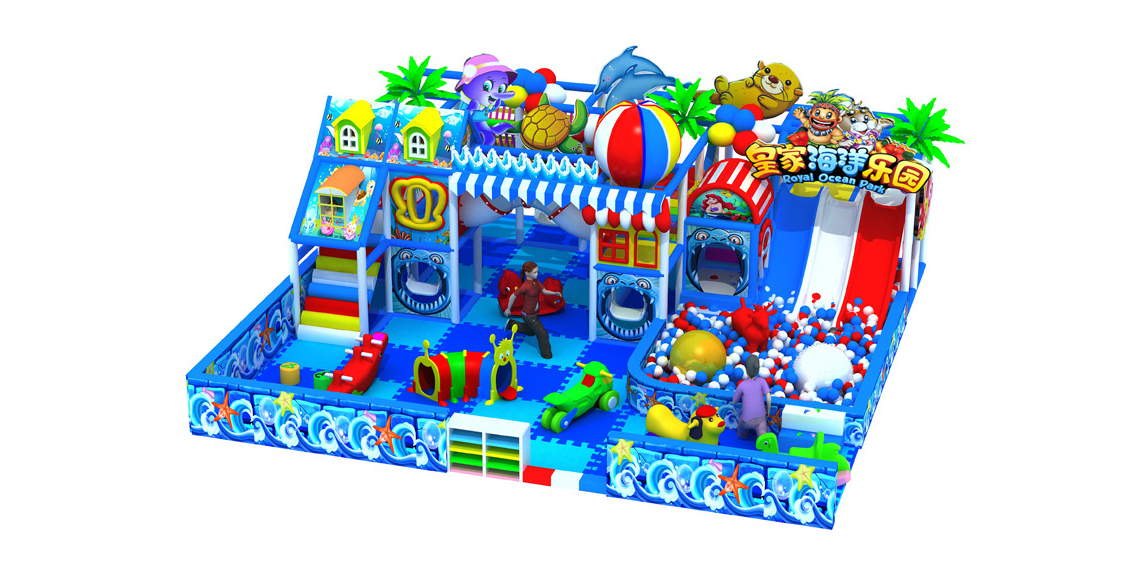
There is no standard price for an indoor playground because the product itself can be very different from one project to another.
Consider two 200 m² venues.
The first might have a basic soft play structure, a small ball pool, several slides and a toddler area.
The second might have a tall multi-level structure, climbing sections, several slide types, themed panels, obstacle features and a separate toddler zone.
They have the same floor area.
They do not have the same equipment.
The same applies to the building.
One 200 m² shopping mall unit may already have finished flooring, lighting, air conditioning and suitable electrical service.
Another 200 m² unit may need electrical work, new flooring, HVAC work, wall modifications and other construction.
So when you see two very different indoor playground startup costs online, the first question should be:
What exactly is included in each estimate?
That question is more useful than trying to find a single average price.
There are several useful published reference points, but they should not be mixed together as though they measure the same thing.
One 2026 cost model covering 133 cities estimates:
Total startup cost: $40,826–$274,064
Typical startup estimate: about $135,147
Equipment and fixtures: $29,568–$188,832
Fit-out and decoration: $7,040–$44,960
Three-month rent deposit: $1,404–$54,000
The source describes these as computed estimates rather than quotations.
A separate September 2026 estimate focused on U.S. venues of 5,000–10,000 sq ft places the total opening budget at approximately $200,000–$670,000, with the play structure itself estimated at around $60,000–$250,000 installed.
Meanwhile, a 2026 supplier-side equipment guide gives a reference range of around $80–$200 per m² for commercial indoor playground equipment before shipping and installation, with a broader $180–$450 per m² benchmark for landed or turnkey equipment costs.
The figures are different because the scope is different.
That is exactly why this article uses market numbers as reference points, rather than presenting one figure as the "correct" indoor playground cost.
The equipment is usually the most visible purchase, so it is where most buyers begin.
For commercial projects, the quotation can depend on the play area, structure height, number of levels, equipment density, slides, climbing features, ball pools, theming and customization. You can review our indoor playground equipment range to see how different commercial configurations are structured.
A supplier-side 2026 benchmark places commercial indoor playground equipment at approximately $80–$200 per m² before shipping and installation.
Using that as a planning reference:
| Play Area | Equipment-Only Reference |
|---|---|
| 100 m² | $8,000–$20,000 |
| 200 m² | $16,000–$40,000 |
| 250 m² | $20,000–$50,000 |
| 500 m² | $40,000–$100,000 |
These are calculations based on the cited market benchmark, not AMA ARCADE quotations.
Actual equipment prices can fall outside these ranges when the project includes unusual dimensions, large multi-level structures, premium theming, specialized attractions or a more extensive installation scope.

When we look at a commercial playground project, floor area is only the beginning.
The structure itself is usually one of the biggest variables.
A simple layout may use fewer steel components, fewer play elements and fewer custom parts. A high-density multi-level design requires more structural work, more components and more production time.
The quotation can be affected by:
| Factor | Impact on Cost |
|---|---|
| Play area | Larger play areas generally require more equipment |
| Structure height | Multi-level systems use more structure and require additional engineering |
| Equipment density | More play features increase manufacturing work |
| Slides | Different slide types have different production requirements |
| Climbing areas | More climbing and obstacle features add components |
| Ball pools | Size and surrounding structure affect material use |
| Toddler areas | Separate age zones require additional equipment and planning |
| Theme | Custom graphics, shapes and decorative panels increase production work |
| Custom dimensions | Non-standard layouts require additional design and manufacturing |
| Installation | Larger or more complex projects can require more installation labor |
This is why we would be careful about comparing two suppliers only by their price per square meter.
You need to compare what is actually being built.
This is especially important for buyers purchasing from overseas manufacturers.
The factory quotation may not be the amount you finally spend before the equipment is ready for installation.
A simple calculation is:
Landed Equipment Cost = Equipment + Freight + Customs + Local Delivery + Installation
For example, if the equipment itself is quoted at $40,000, the project cost does not automatically stop at $40,000.
The freight route, destination country, customs arrangements and installation method can all change the final amount.
One 2026 industry guide uses an additional 30% or more as an early budgeting check for landed and turnkey costs, but actual logistics costs can vary considerably by route and project.
We would therefore use that kind of percentage only as an early planning tool.
Before placing an order, ask the supplier:
Is freight included?
Is customs included?
Is local delivery included?
Is installation included?
Are spare parts included?
Are technical drawings included?
Those questions can make a bigger difference than a small change in the equipment price.
Once you have a realistic equipment budget, build the rest of the project around it.
| Cost Category | Typical Items |
|---|---|
| Playground equipment | Soft play structure, slides, ball pool, climbing features |
| Venue | Deposit, advance rent, lease-related costs |
| Renovation | Flooring, electrical, walls, lighting, HVAC |
| Safety | Surfacing, barriers and safety-related site work |
| Shipping | International freight, customs and local delivery |
| Installation | Equipment assembly and installation |
| Licenses | Local business and operating approvals |
| Insurance | Commercial liability and other required coverage |
| Furniture | Reception desk, seating, storage |
| Technology | POS, booking, ticketing and payment equipment |
| Opening marketing | Signage, launch campaign and local advertising |
| Working capital | Cash reserved for the first months of operation |
The U.S. Small Business Administration recommends separating one-time startup expenses from ongoing costs when calculating how much capital a new business requires.
That distinction is particularly useful for indoor playgrounds.
You can spend $60,000 on equipment and still need substantial capital after the installation is finished.
Let's use a 200 m² venue as a simple example.
This is not a quotation. It is a way to show how an investor can build a project budget.
Suppose the venue has:
Total floor area: 200 m²
Main play area: around 150–170 m²
Remaining area: reception, parent seating, circulation, storage and other functions
Using the published 2026 equipment benchmark of $80–$200 per m² as a reference, the equipment-only estimate would be roughly:
$16,000–$40,000
That leaves the following items to calculate separately:
| Budget Item | How to Estimate It |
|---|---|
| Playground equipment | Based on actual layout and equipment configuration |
| Freight | Ask the forwarder or supplier for the destination |
| Customs | Based on local import rules |
| Installation | Ask whether factory installation support is available |
| Flooring | Local contractor quotation |
| Renovation | Local contractor quotation |
| Rent deposit | Based on the actual lease |
| Insurance | Local insurance quotation |
| Licenses | Local authority |
| Furniture / POS | Based on the business model |
| Marketing | Opening plan |
| Working capital | Keep separate from equipment budget |
The important point is that the $16,000–$40,000 equipment estimate is not a $16,000–$40,000 business startup.
The venue still needs to open.
A 500 m² venue changes the discussion.
You have much more room, but you also have to decide what that extra space is supposed to do.
A larger project could include:
Large multi-level soft play
Separate toddler zone
Obstacle or climbing area
Birthday rooms
Interactive attractions
Arcade games
Food and beverage
Membership services
Using the same published $80–$200 per m² equipment benchmark, 500 m² would produce an equipment-only reference of approximately $40,000–$100,000. A broader landed/turnkey benchmark of $180–$450 per m² would suggest roughly $90,000–$225,000 before considering the rest of the business startup costs.
Again, these numbers are reference calculations, not an AMA ARCADE quotation.
At this scale, the building and operating model become increasingly important.
More space can mean more rent, more staff, more cleaning and more maintenance.
Bigger does not automatically mean more profitable.
A playground equipment supplier can control the equipment quotation.
They cannot control the rent in your city or the condition of the building you choose.
That is why we recommend checking the venue before spending too much time finalizing equipment.
At a minimum, check:
Floor area
Clear ceiling height
Columns and fixed obstacles
Electrical capacity
HVAC
Floor condition
Emergency exits
Restrooms
Parking
Customer visibility
Loading access
If any of these create a major problem, the cost of adapting the venue can change the project budget quickly.
The SBA also recommends looking at location, target customers, market demand, competition and pricing as part of business planning.
A cheaper building with poor access or limited family traffic is not necessarily the better investment.
There is no useful worldwide average for renovation.
The building may already be close to ready, or it may need major work.
Possible costs include:
Flooring
Lighting
Electrical
Air conditioning
Ventilation
Walls
Reception
Bathrooms
Party rooms
Signage
Fire-related modifications
For this reason, renovation should normally be estimated locally rather than taken from a generic indoor playground article.
If you are still negotiating the lease, it is worth finding out what the building owner will cover and what will be your responsibility.
That detail alone can make a meaningful difference to the startup budget.
Safety should be considered during the design stage, not added after the equipment has been selected.
The applicable requirements depend on the country, local authority, building and equipment type.
In the United States, ASTM F1918-21 is a safety performance specification for soft contained play equipment. Its scope includes materials and manufacture, performance requirements, access and egress, structural integrity, maintenance, fire safety and evacuation.
In Europe, relevant playground requirements can involve standards in the EN 1176 family, depending on the equipment and application.
Do not assume that a single certificate answers every compliance question.
For a commercial project, ask the manufacturer for the documentation relevant to your destination market, including applicable test reports, material information, structural information and installation guidance.
Also check local requirements for:
Fire safety
Emergency exits
Accessibility
Building approvals
Occupancy
Insurance
The supplier handles the equipment.
The local authority determines what your venue needs to operate legally.
Both sides matter.
There is no universal minimum floor area.
A small play area can work in part of a shopping mall or commercial venue. A larger playground or FEC may need several hundred square meters or more.
The mistake is to use every available square meter for equipment.
You need room for:
Play zones
Reception
Parent seating
Circulation
Storage
Staff areas
Bathrooms
Emergency access
Party rooms or other functions
Ceiling height matters just as much as floor area when you are considering a multi-level playground.
Our Indoor Playground Design Guide goes into more detail on space planning, age zoning, traffic flow and supervision.
A mixed-age venue can divide the layout into different zones.
And an FEC can combine indoor playground equipment with arcade games, racing games, VR and other attractions.
This is why we recommend deciding on the target customer first.
Ask:
Who is going to use this space?
How long should a typical visit last?
What will bring families back?
Which activities should generate additional spending?
Those questions are more useful than simply trying to fill the venue with equipment.
Custom design can be valuable, but it is not automatically the better choice.
A standard configuration may be a sensible option for a simple rectangular venue with standard dimensions.
Custom design becomes more useful when the venue has columns, unusual dimensions, awkward corners, specific branding requirements or a particular theme.
For example, a custom layout can help use an irregular shopping mall space more effectively.
On the other hand, spending heavily on custom decoration that does not improve the customer experience may not provide much commercial value.
A better question is:
What problem is the customization solving?
Admission is usually the starting point, but commercial indoor playgrounds can use several revenue sources.
| Revenue Source | Typical Purpose |
|---|---|
| Admission | Main pay-per-visit revenue |
| Memberships | Encourage repeat visits |
| Birthday parties | Higher-value bookings |
| Group events | Schools, organizations and private groups |
| Food & beverage | Increase customer spending |
| Arcade games | Add paid entertainment |
| Other attractions | Extend dwell time and spending |
Birthday parties can be particularly useful because they turn a normal play visit into a packaged event.
Memberships work differently. They are designed to encourage customers to return regularly.
For FEC operators, the playground can also become one part of a wider entertainment mix.
Our Indoor Playground for FEC guide covers equipment selection, zoning and how playgrounds can fit into a broader FEC concept.
It can be, but equipment cost alone cannot tell you whether a project will make money.
A basic revenue calculation is:
Monthly Revenue = Visitors × Average Spend per Visitor
Then estimate the operating expenses:
Rent + Payroll + Utilities + Insurance + Cleaning + Maintenance + Marketing + Other Costs
The difference between a good project and a weak project is often not the equipment.
It may be the rent.
It may be weekday traffic.
It may be pricing.
It may be poor utilization.
It may be insufficient repeat visits.
Two playgrounds with the same equipment can have very different financial results.
For that reason, we would not recommend putting a fixed "12-month payback" or "24-month payback" into a business plan without knowing the actual project figures.
A published 2026 cost model, for example, shows that estimated monthly operating costs can range from a few thousand dollars to more than $50,000 depending on the market. It also describes break-even periods as estimates rather than guarantees.
That is a much more useful way to think about ROI.
Our Indoor Playground ROI Guide covers revenue streams, operating costs and payback considerations in more detail.
There are three areas that deserve extra attention.
The factory price is not the final delivered price.
Freight, customs and local transportation can change the landed cost.
The equipment may be ready to install, but the building may not be.
Flooring, electrical, HVAC, fire-related work and other site preparation can add significantly to the budget.
This is the cost that does not appear in the equipment catalogue.
The business still needs money after opening.
You may have rent, payroll, utilities, cleaning, maintenance and marketing costs before the customer base becomes stable.
That is why we recommend keeping working capital separate from the equipment budget.
From an equipment manufacturer's point of view, the first discussion is usually not:
"How much does a 300 m² playground cost?"
The first discussion is about the venue.
We want to know:
How much space is available?
How high is the ceiling?
Where are the columns?
What age group are you targeting?
Is this a shopping mall, FEC, commercial plaza or another venue?
Do you have a theme in mind?
How much space should remain outside the play structure?
What is the approximate budget?
Once those questions are clear, it becomes much easier to decide what type of equipment configuration makes sense.
That is also why a project-specific quotation is usually more useful than a generic price-per-square-meter answer.
Indoor playground projects can look very different even when their floor areas are similar.
A smaller shopping mall playground may be designed around quick access, visibility and a compact equipment package.
A medium commercial playground may put more emphasis on capacity, different age zones and birthday parties.
A larger FEC can treat the playground as one attraction within a much broader entertainment environment.
The project case studies on AMA ARCADE show examples of indoor playgrounds combined with other attractions and commercial entertainment zones.
Our Indoor Playground Project Case Study also shows how equipment layout, zoning and the overall venue concept can work together.
The point is not that one model is better than another.
The right design depends on the market and the building.
A project quotation should start with the actual space.
Our typical planning process is:
1. Review the venue
Floor area, ceiling height, columns, entrances, exits and other fixed conditions.
2. Define the users
Target age groups and expected customer profile.
3. Plan the zones
Toddler, children, mixed-age, party or other areas.
4. Select the equipment
Structures, slides, climbing features, ball pools and other attractions.
5. Check customization
Theme, colors, dimensions, graphics and branding requirements.
6. Review installation
How the equipment will be assembled and what site preparation is required.
7. Check logistics
Shipping method, destination and delivery requirements.
8. Prepare the quotation
The final quotation should clearly show what is included and what is not.
This process also makes supplier comparison easier.
You are no longer comparing two random prices.
You are comparing two project scopes.
The lowest quotation is not automatically the cheapest project.
Suppose Supplier A quotes $50,000 and Supplier B quotes $70,000.
At first glance, Supplier A looks cheaper.
Then you discover that Supplier A excludes:
Freight
Installation
Certain design work
Spare parts
While Supplier B includes them.
Now the $20,000 difference may not be a real price difference at all.
When comparing suppliers, check the scope:
| What to Compare | What to Ask |
|---|---|
| Equipment | Exactly what is included? |
| Layout | Is the design based on the actual venue? |
| Materials | What materials are being used? |
| Customization | What can be changed? |
| Safety documentation | What reports and documents are available? |
| Production | What is the expected production time? |
| Packaging | How will the equipment be packed? |
| Shipping | What shipping terms are being offered? |
| Installation | Is it included? |
| Spare parts | Can replacement parts be supplied? |
| Warranty | What does it cover? |
| After-sales | Who provides technical support? |
The goal is to compare like with like.
You do not need a complete business plan.
For an initial equipment discussion, the following information is usually enough:
Country and city
Total floor area
Ceiling height
Floor plan, if available
Target age group
Venue type
Preferred theme
Equipment preferences
Approximate budget
Target opening date
A floor plan is particularly useful.
It lets the manufacturer see the actual usable space rather than estimating from one number such as "300 m²."
For a custom commercial playground, working directly with a manufacturer can simplify communication between design, production and installation.
It can also make customization easier when the project has unusual dimensions or a specific theme.
But "factory direct" should not be the only reason you choose a supplier.
Check the manufacturer's:
Production capability
Previous projects
Materials
Quality-control process
Technical documentation
Packaging
Installation support
Warranty
After-sales service
AMA ARCADE is a brand of Guangzhou AMA Amusement Equipment Co., Ltd. and provides commercial indoor playground and soft play equipment for shopping malls, Family Entertainment Centers and other entertainment projects. The current indoor playground offering includes custom layouts and themed solutions, with design and installation guidance for commercial projects.
If you already have a venue, work through the budget in this order:
Step 1 — Venue
Calculate rent, deposit and other property costs.
Step 2 — Layout
Decide how much of the venue should actually become play space.
Step 3 — Equipment
Get a project-based quotation instead of relying only on a generic price per square meter.
Step 4 — Landed Cost
Add freight, customs, local delivery and installation.
Step 5 — Site Work
Get local estimates for flooring, electrical, HVAC, lighting and other construction.
Step 6 — Opening Costs
Add licensing, insurance, furniture, technology and initial marketing.
Step 7 — Working Capital
Keep cash available for the first months of operation.
This gives you a much more realistic view of how much money you need before opening.
This guide uses published 2026 market estimates as reference points, not as AMA ARCADE quotations.
The cost ranges and examples are intended to help investors understand how indoor playground budgets are structured. Equipment pricing can vary significantly according to project size, equipment density, customization, destination country, freight and installation requirements.
Third-party cost estimates should not be averaged together blindly because they cover different markets and project scopes.
The equipment examples in this guide are planning calculations based on published supplier-side benchmarks. A project quotation should always be prepared from the actual venue, layout and equipment requirements.
For business planning, readers should also confirm local requirements for licensing, building approval, insurance, fire safety, accessibility and other applicable regulations.
Relevant references include the U.S. Small Business Administration's guidance on startup costs and break-even planning, ASTM F1918-21 for soft contained play equipment, and current 2026 market estimates referenced above.
This guide is written
If you already have a location, you do not need to guess from an average online price.
Send AMA ARCADE your:
Floor area
Ceiling height
Country
Floor plan
Target age group
Approximate budget
From there, our team can review the space and discuss a suitable indoor playground equipment configuration for the project.


